Classic Thanksgiving Turkey Recipe

By · Share

Updated

A classic roasted turkey with savory herbs and aromatics, resulting in juicy meat and perfectly crisp, golden-brown skin.

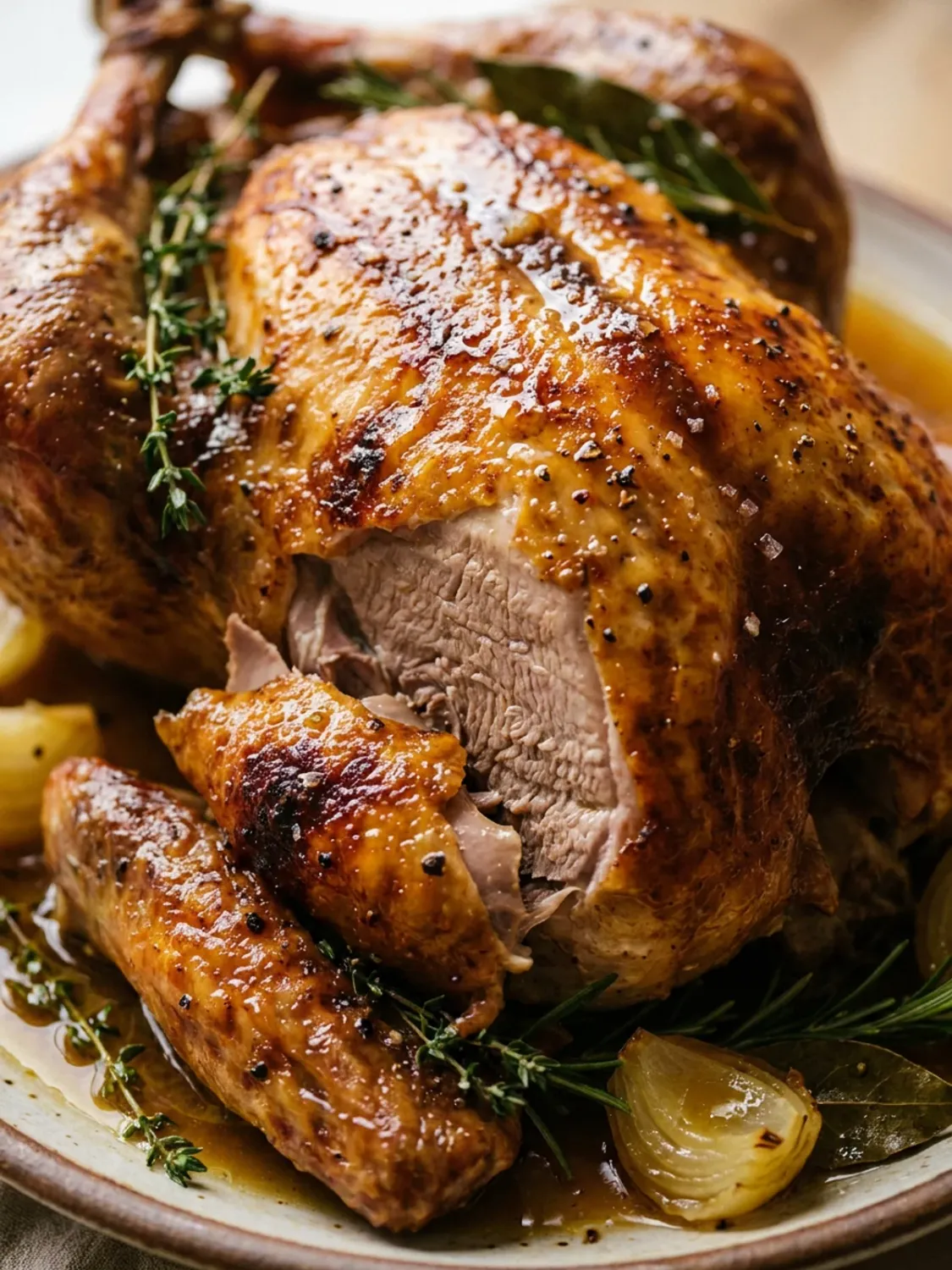
A close-up of a carved Thanksgiving turkey on a white platter, showing juicy breast meat.

A classic roasted turkey is the centerpiece of any Thanksgiving table. This recipe uses a simple dry brine and aromatic vegetables to create a bird that is both moist and full of flavor, with beautifully crisp skin.

While roasting a whole turkey might seem like a big project, the process is quite straightforward. Most of the time is hands-off, letting the brine and the oven do the work. The result is a wonderful main dish that will make your holiday meal feel special.

Why this works

  • Dry brining: Salting the turkey ahead of time seasons the meat deeply and helps it retain moisture, giving you juicy results.
  • Two-temperature roasting: Starting hot crisps the skin, then lowering the temperature cooks the meat gently and evenly without drying it out.
  • Aromatic pan liquid: Roasting the turkey over wine, broth, and vegetables creates a flavorful steam that scents the meat and provides a rich base for gravy.

Ingredients you'll need
A whole raw turkey on a baking sheet, seasoned with salt and pepper for dry brining.
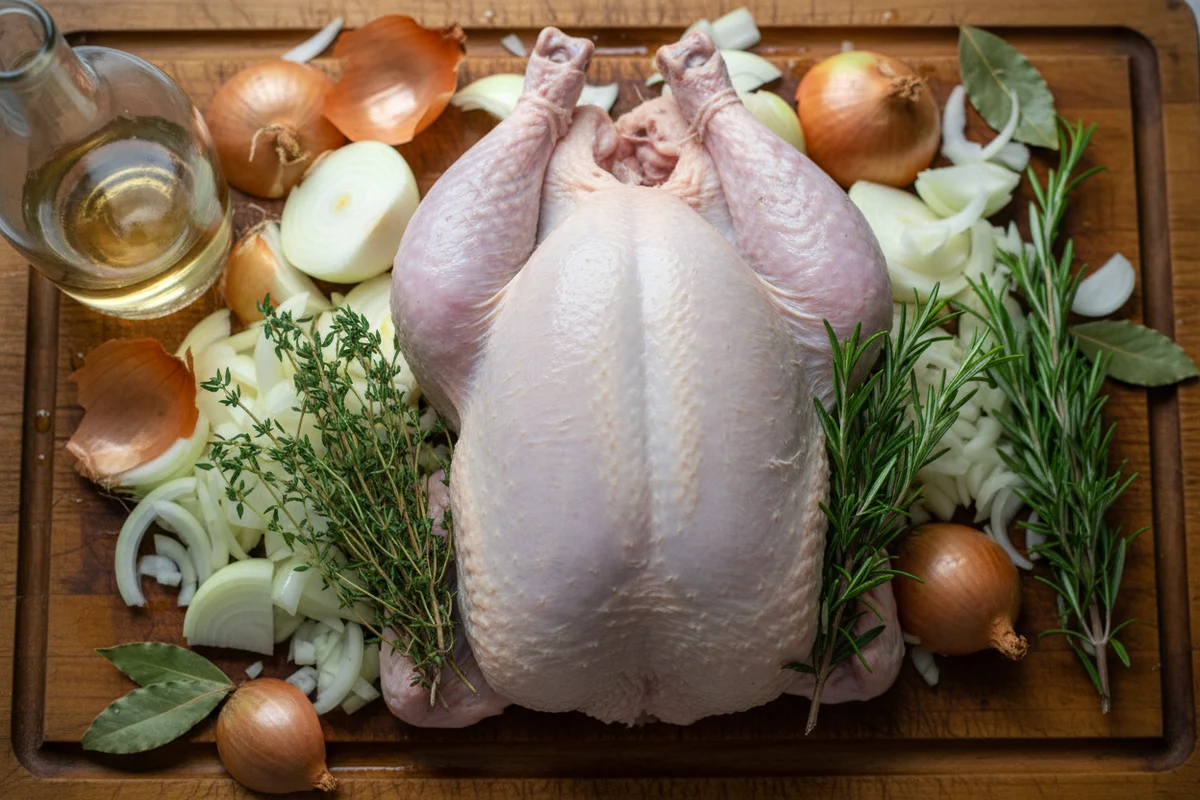
The ingredients for a classic roast turkey: a whole turkey, onions, garlic, fresh herbs, wine, and broth.
  • Turkey: A fresh turkey is convenient, but a frozen one works just as well. Make sure it's fully thawed in the refrigerator before you begin, which can take several days depending on its size.
  • Kosher Salt: The larger crystals are ideal for drawing out moisture in a dry brine. If you only have table salt, use about half the amount as it is much finer.
  • Dry White Wine: Choose a crisp wine you would enjoy drinking, like a Sauvignon Blanc or Pinot Grigio. It adds acidity and depth to the pan drippings. You can substitute with more broth if you prefer.
  • Fresh Herbs: Thyme and rosemary are classic choices that fill the kitchen with a savory aroma. You can use one or a combination. Sage is another good option.

Exact quantities are in the recipe card below.

How to make it

Step 1: Brine the Turkey

At least one day before you plan to roast, prepare the turkey. Remove the giblets, pat the bird completely dry, and rub it all over with salt and pepper. Place it on a rack over a sheet pan and refrigerate it, uncovered. This step is key for seasoned meat and crisp skin.

Step 2: Prepare for the Oven

On roasting day, let the turkey sit at room temperature for an hour for more even cooking. Heat your oven to 450°F. Fill the bottom of your roasting pan with wine, broth, and half of your onions and garlic. Stuff the turkey's cavity with the remaining aromatics and fresh herbs.
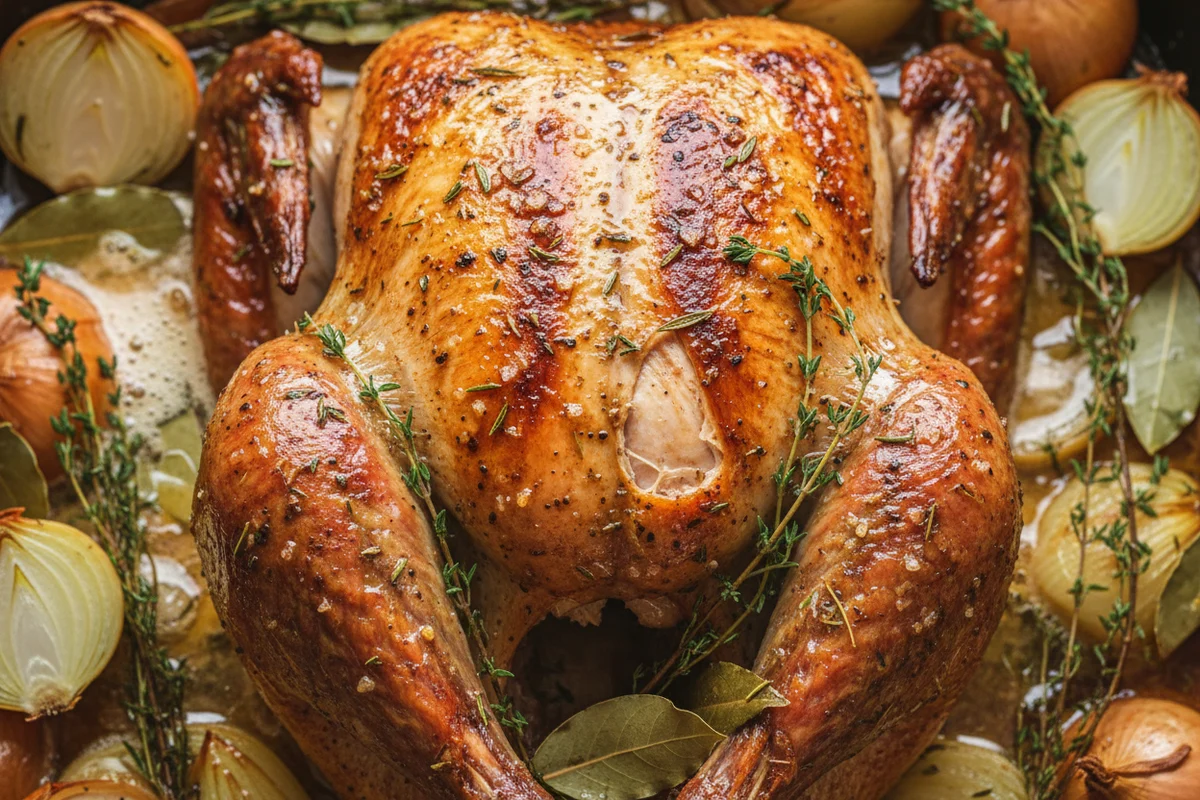
A hand rubbing softened butter all over the skin of a whole turkey in a roasting pan.
The turkey in a roasting pan, ready for the oven with aromatics in the pan and cavity.

Step 3: Roast and Rest

Rub the turkey skin with softened butter, then place it in the hot oven. Roast for 30 minutes to get the skin golden, then reduce the heat to 325°F. Continue roasting until the internal temperature is correct. Resting the turkey for at least 20 minutes before carving is essential for the juices to settle.
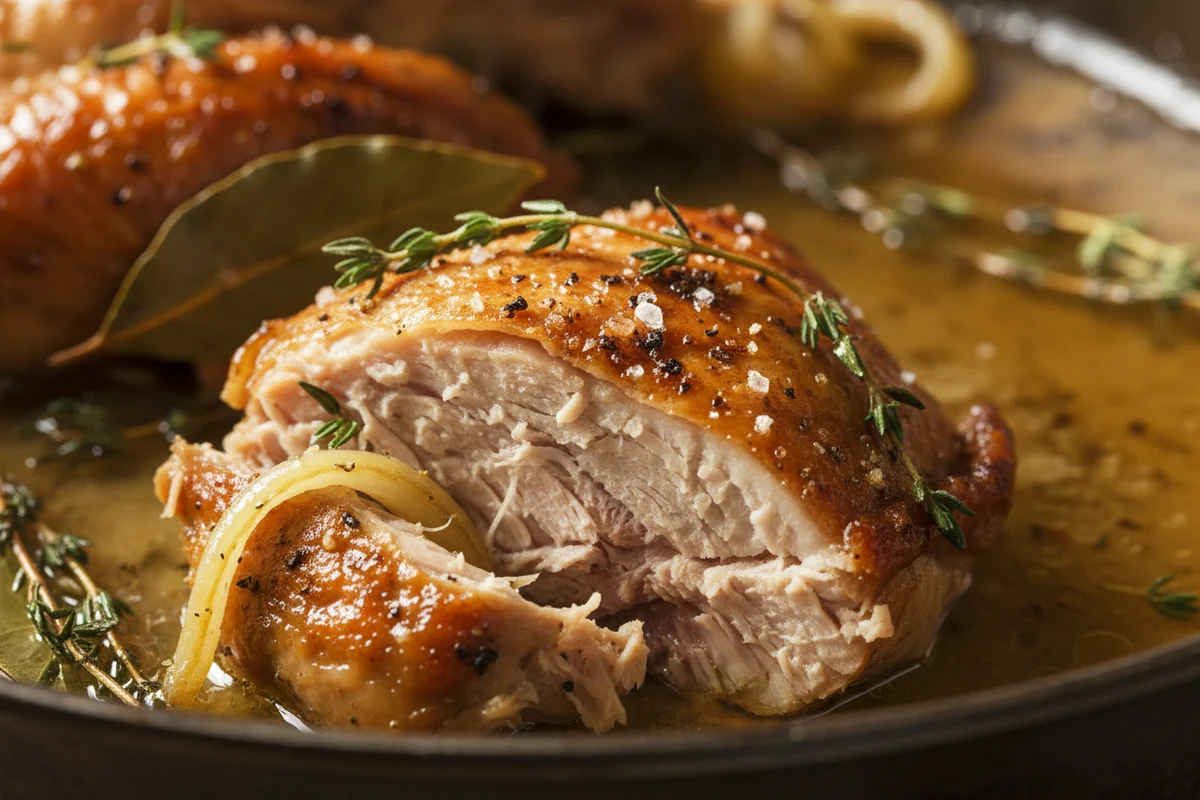
A close-up of a carved Thanksgiving turkey on a white platter, showing juicy breast meat.
A beautifully roasted golden-brown Thanksgiving turkey on a cutting board, ready to be carved.

Serve it with

Serve this turkey as the main event for your Thanksgiving dinner. The pan drippings are perfect for making a rich gravy to pour over the meat and mashed potatoes.

Storage and reheating

Store leftover carved turkey in an airtight container in the refrigerator for up to 4 days. For longer storage, you can freeze the meat for up to 3 months. Reheat leftovers gently in the oven or microwave with a splash of broth to keep them moist.

FAQ

How do I know when my turkey is done?

The only way to be sure is with a meat thermometer. It should reach a final temperature of 165°F (74°C) in the thickest part of the thigh. We recommend pulling the turkey from the oven when it reaches 155°F (68°C), as the temperature will continue to rise as it rests.

Why dry brine instead of wet brine?

Dry brining is less messy and takes up much less space in your refrigerator. It works by drawing moisture out of the skin to make it crisp, while the salt seasons the meat and helps it retain its natural juices.

Can I stuff this turkey with bread stuffing?

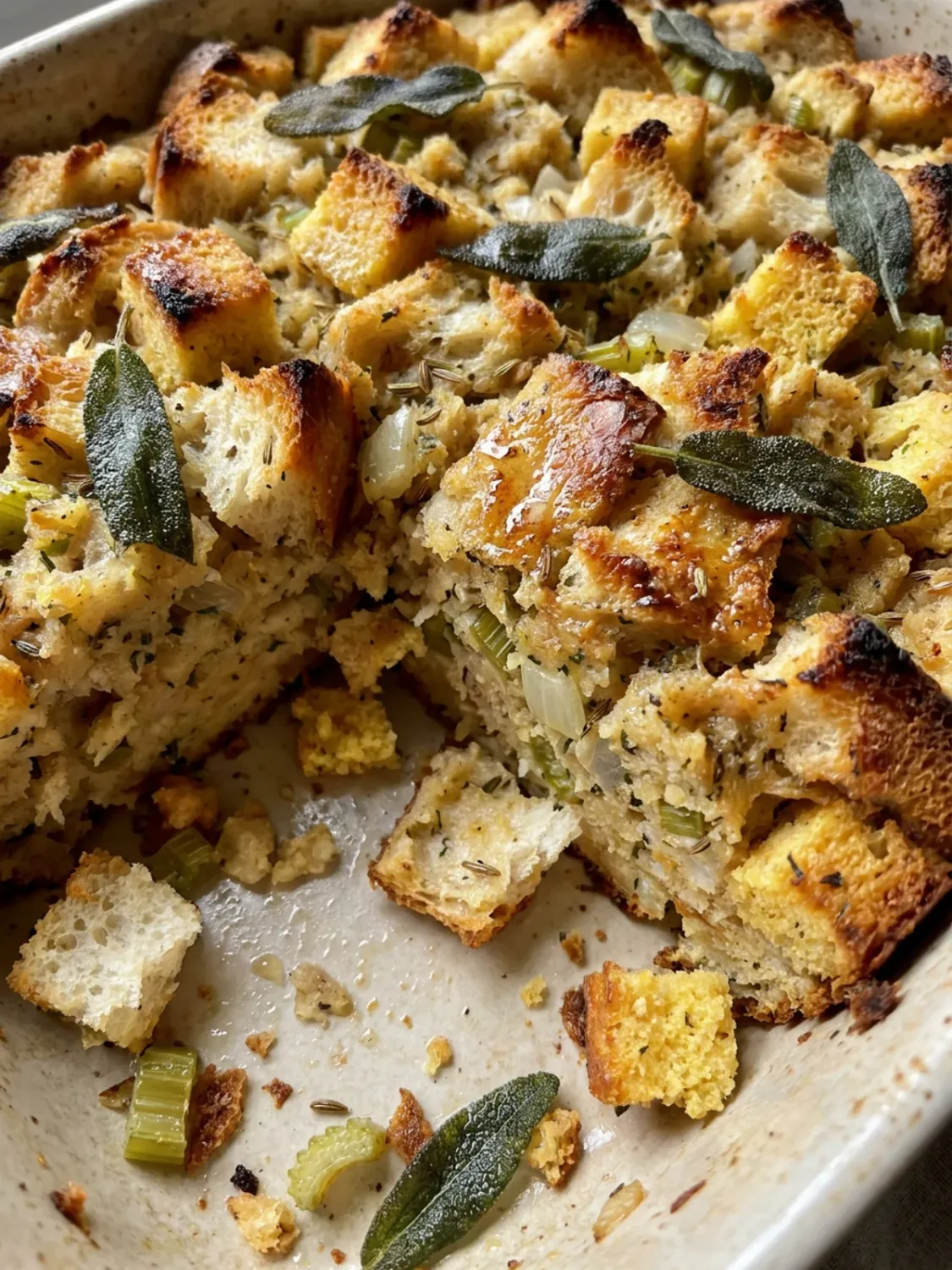
This recipe stuffs the cavity with aromatics for flavor, not a bread-based stuffing. For food safety, it's best to cook stuffing in a separate dish. If you do stuff the bird, the stuffing must also reach 165°F (74°C), which can often lead to overcooked turkey meat.
A close-up of a carved Thanksgiving turkey on a white platter, showing juicy breast meat.

Classic Thanksgiving Turkey Recipe

A classic roasted turkey with savory herbs and aromatics, resulting in juicy meat and perfectly crisp, golden-brown skin.

By Claire Whitman · recipeswemade.com

Prep
20 min
Cook
2 hr 30 min
Total
2 hr 50 min
Servings
10
Course: Main CourseCuisine: AmericanMethod: RoastingDifficulty: Medium
Pin

Ingredients

Instructions

  1. One to three days before roasting, prepare the turkey. Remove giblets and the neck from the cavity. Pat the turkey completely dry with paper towels. In a small bowl, combine the kosher salt and black pepper. Rub this mixture all over the outside of the turkey, inside the cavity, and under the skin of the breasts and thighs.
  2. Place the turkey on a wire rack set inside a rimmed baking sheet. Refrigerate, uncovered, for at least 12 hours and up to 3 days. This process, known as dry brining, seasons the meat and dries the skin for maximum crispiness.
  3. When ready to cook, remove the turkey from the refrigerator and let it sit at room temperature for 1 hour. Preheat your oven to 450°F (232°C).
  4. Scatter half the quartered onions, half the smashed garlic cloves, and the bay leaves in the bottom of a large roasting pan. Pour in the white wine and 1 cup of broth.
  5. Stuff the turkey cavity with the remaining onion, garlic, thyme, and rosemary. Rub the softened butter all over the skin of the turkey. Tuck the wing tips under the body and tie the legs together with kitchen twine, if you like.
  6. Place the turkey on a roasting rack set inside the pan. Transfer to the oven and roast for 30 minutes at 450°F (232°C).
  7. Reduce the oven temperature to 325°F (163°C). Continue roasting until an instant-read thermometer inserted into the thickest part of the thigh (not touching bone) registers 155°F (68°C), about 1.5 to 2 hours more. If the bottom of the pan looks dry, add more broth.
  8. Carefully transfer the turkey to a large cutting board. Let it rest for 20 to 30 minutes before carving. During this time, the internal temperature will rise to the safe temperature of 165°F (74°C).
  9. Reserve the drippings from the pan to make gravy. Carve the turkey and serve warm.

Notes

  • Food Safety: Poultry is safe to eat when cooked to a minimum internal temperature of 165°F (74°C). The temperature will continue to rise after removing it from the oven, so pulling it out at 155°F and letting it rest is key to moist meat.
  • Thawing a Turkey: A frozen turkey needs several days to thaw safely in the refrigerator. Plan on about 24 hours of thawing time for every 4 to 5 pounds of turkey.
  • Dry Brining: Don't skip the brining time. This is the most important step for a flavorful, juicy turkey. Even 12 hours will make a big difference.
  • Pan Drippings: The liquid and browned bits left in the bottom of the roasting pan are full of flavor. Strain them and use them as a base for a rich, homemade gravy.

Did you make this? Save it to your Thanksgiving Recipes board so you can find it again.

Pin it

Be the first to review this recipe

    Leave a review

    Your rating

    Reviews are checked before they are published. Your name is shown with your review.

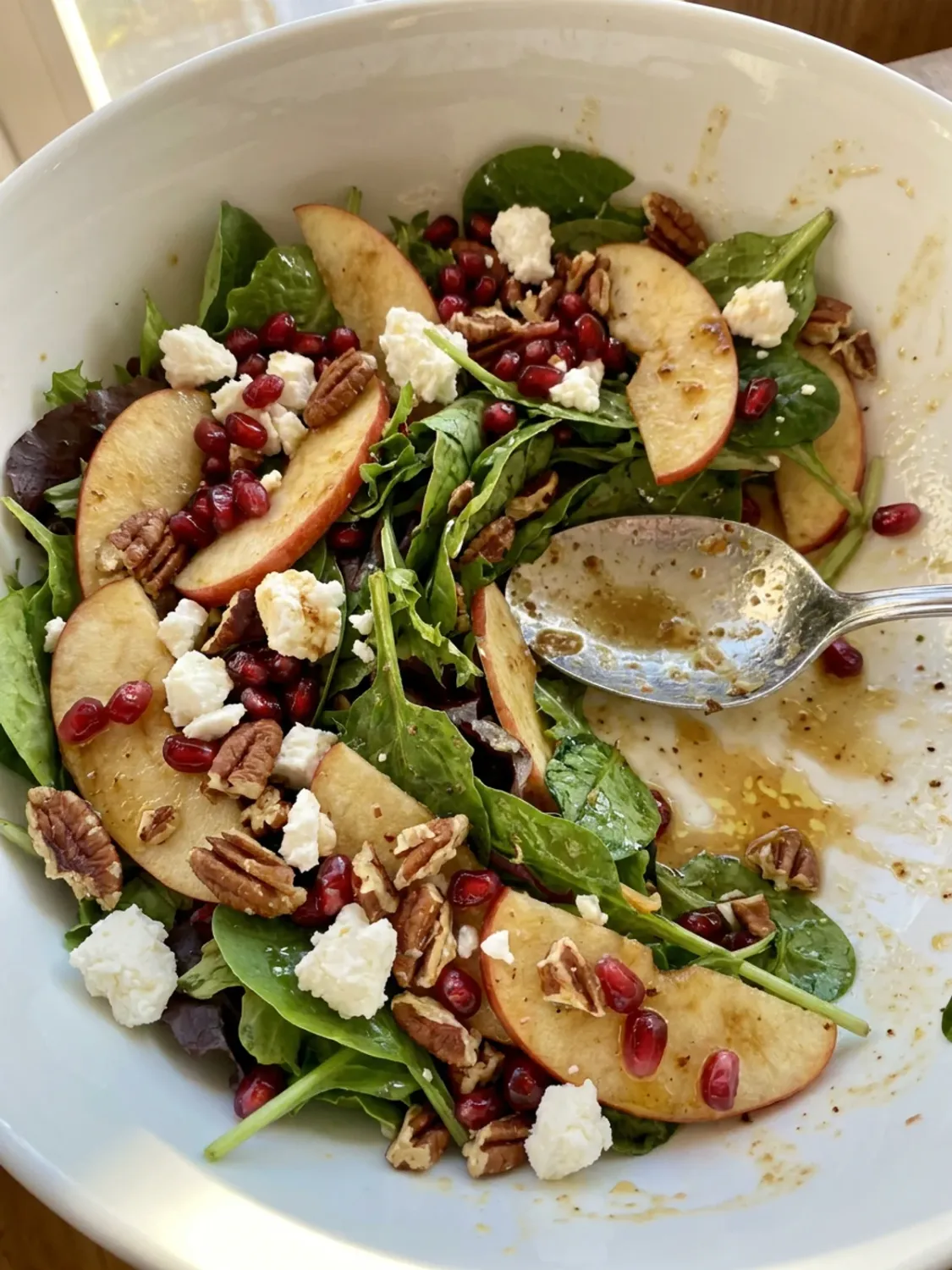
    Up next · ThanksgivingThanksgiving SaladA festive salad with crisp apples, pomegranate seeds, pecans, and feta cheese in a simple honey-mustard vinaigrette.Get the recipe →

    You might also like

    All thanksgiving recipes →